Pivot Front Doors Explained: How They Work, Where They Fit & What to Consider

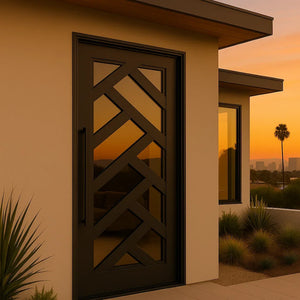
The entrance of a property is one of the first architectural features people notice. While traditional hinged doors remain popular, homeowners, architects, and designers are increasingly choosing larger and more distinctive entrance systems. One of the most eye-catching options is the pivot door, known for its impressive proportions, smooth operation, and contemporary appearance. At Native Doors, pivot door designs are crafted to combine modern aesthetics with practical functionality, making them a striking choice for residential and architectural projects where the entrance is meant to make a lasting impression.
What Is a Pivot Door?
A pivot door rotates around a vertical pivot axis rather than swinging on conventional hinges mounted along one side. This design allows for larger and heavier door panels, which is why pivot doors are so often chosen for statement entrances.
How Does a Pivot Front Door Work?
The basic principle behind a pivot front door is straightforward. Instead of being attached to the frame with hinges along one vertical edge, the door is supported by pivot hardware installed at specific points, usually at the top and bottom.
The pivot point can be positioned close to the edge of the door or further toward the center. Its location affects how the door moves, the size of the opening, and the visual appearance of the entrance.
Why Are Pivot Entrance Doors Popular?
Modern architecture often emphasizes large openings, minimalist details, natural light, and strong visual connections between interior and exterior spaces. Pivot entrance doors complement these design principles extremely well.
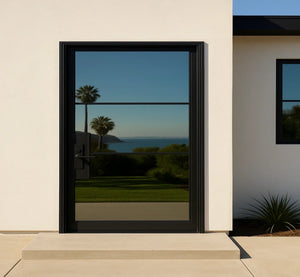
A modern pivot door is especially effective on minimalist façades where clean architectural lines are a priority.
Where Do Exterior Pivot Doors Work Best?
Exterior pivot doors are commonly used as main entrances, particularly on properties with large or visually prominent entryways. They work well for:
- Contemporary houses
- Luxury residences
- Apartment buildings
- Offices
- Hotels and restaurants
- Other architectural projects
For residential properties, a large pivot front entrance creates a strong first impression while providing a practical transition between the outdoors and your interior living spaces.
Materials and Design Options
Aluminum is frequently used for contemporary designs because it offers a clean appearance, durability, and a wide range of finish options. Aluminum pivot systems can also be combined with large glass panels for a bright, open look.
Timber provides a warmer, more natural aesthetic. A timber pivot front door adds texture and character to both contemporary and transitional properties.
Pivot Door Comparison
The right door system depends on the property's style, available space, desired appearance, and performance requirements. The following comparison highlights some key differences between conventional hinged doors and pivot systems.
| Feature | Traditional Hinged Door | Pivot Door | Large Modern Pivot Door |
|---|---|---|---|
| Opening System | Side-mounted hinges | Top and bottom pivot mechanism | Heavy-duty pivot mechanism |
| Typical Size | Standard | Large | Extra-large |
| Design Style | Traditional to contemporary | Contemporary | Luxury and architectural |
| Visual Impact | Moderate | High | Very high |
| Customization | Moderate | High | Very high |
| Hardware | Conventional hinges | Pivot hardware | Heavy-duty concealed or premium hardware |
| Best Suited For | Standard entrances | Modern homes and projects | Luxury homes and statement entrances |
| Installation | Generally straightforward | Requires specialist installation | Requires careful structural planning |
| Cost | Usually lower | Generally higher | Can be significantly higher |
| Maintenance | Relatively simple | Depends on system and material | Requires attention to hardware and finish |
This comparison shows why pivot systems are particularly attractive when the goal is to create a large, distinctive entrance.
Benefits of a Modern Pivot Door
The visual impact of a modern pivot door is one of its biggest advantages. A carefully designed oversized entrance can dramatically change the appearance of a building and create a strong focal point.
Other key benefits include:
- Size: Pivot hardware can support large door panels while maintaining smooth movement when the system is correctly engineered.
- Design flexibility: Homeowners can choose different materials, dimensions, colors, glazing options, handles, and locking systems.
- A distinctive opening experience: Instead of moving from a single edge like a standard hinged door, a pivot system rotates around its pivot axis, creating a different and often more fluid movement.
- A seamless look: For contemporary architecture, large doors can integrate with minimalist frames and clean surfaces.
However, these benefits depend on good engineering. A large pivot door requires appropriate hardware, structural support, accurate installation, and specifications suited to the property's environment.
Pivot Doors for Sale: What to Look For
When searching for pivot doors for sale, it is easy to focus only on appearance or advertised price. A better approach is to compare the complete specification.
Check what is included in the price. Depending on the supplier, the package may include the door panel, frame, pivot hardware, locking system, handles, glazing, delivery, and installation, or these may be priced separately.
For custom-sized doors, ask about maximum dimensions, weight limits, available finishes, lead times, customization options, warranty coverage, and installation requirements.
The quality of the pivot mechanism is particularly important. Since the hardware controls the movement of the door, a properly engineered system has a significant impact on long-term performance.
Installation and Maintenance
Professional installation is highly recommended for pivot entrance doors, especially when dealing with oversized panels.
The installer needs to ensure that the frame is correctly aligned and that the pivot hardware is accurately positioned. The finished floor level, door clearances, locking system, seals, and surrounding structure should all be considered.
After installation, routine maintenance helps preserve the door's appearance and functionality. Moving components should be inspected according to the manufacturer's recommendations, and weather seals should be checked periodically.
Clean the exterior surface with products suited to the specific material and finish, and avoid harsh chemicals and abrasive cleaners.
Are Pivot Doors Suitable for Every Home?
A pivot door can be an excellent choice, but it is not right for every property.
A very large door may overwhelm a small entrance or create unnecessary structural and installation requirements. In those situations, a conventional door may be the more practical solution. For larger contemporary properties, however, the proportions of a pivot system can complement the architecture beautifully.
The local climate should also be considered. Properties exposed to strong sunlight, heavy rainfall, high humidity, or coastal conditions may require specially selected materials and finishes.
Ultimately, the best choice balances aesthetics, functionality, security, durability, and budget.
Conclusion
A pivot door can transform an ordinary entrance into a defining architectural feature. With their large proportions, smooth rotation, extensive customization options, and contemporary appearance, pivot systems are increasingly used in modern residential and commercial architecture.
Contact Us
Contact us today to discuss your pivot door requirements, explore available designs, and find the right entrance solution for your property.
Frequently Asked Questions
1. What is a pivot door?
A pivot door is a door that rotates around a vertical pivot axis rather than using conventional hinges mounted along one side. This design allows for larger and heavier door panels.
2. What is the difference between a pivot front door and a regular front door?
A conventional front door generally swings from side-mounted hinges, while a pivot front door rotates around a pivot mechanism. Pivot systems can accommodate larger panels and offer a distinctive contemporary appearance.
3. Are pivot entrance doors secure?
Yes. Properly engineered pivot entrance doors can provide strong security when combined with a suitable frame, locking system, hardware, and appropriate glazing.
4. Are exterior pivot doors suitable for all weather conditions?
Exterior pivot doors can be designed for outdoor use, but the specifications should match the local climate. Weather seals, thresholds, drainage, materials, and glazing all influence performance.
5. Are pivot doors expensive?
Pivot doors generally cost more than standard hinged doors because they may involve larger panels, specialized hardware, custom manufacturing, and professional installation. The final cost depends on the material, size, finish, hardware, glazing, and customization.
6. Can I customize a modern pivot door?
Yes. Many modern pivot door systems can be customized in size, material, color, finish, glazing, hardware, handles, and locking requirements.
7. How do I choose between different pivot doors for sale?
Compare the complete specifications rather than just the price. Pay attention to door construction, maximum dimensions, hardware quality, security, weather performance, finish, warranty, installation, and after-sales support.