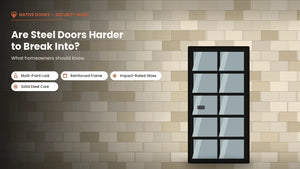
The Strongest Front Door: What Really Makes an Entry Door Secure

Your front door is more than the first thing guests notice when they visit. It is one of the most important components of your home's security. A well-designed door helps protect your family, belongings, and privacy while also improving curb appeal and energy efficiency. At Native Doors, we understand that homeowners want an entry door that offers dependable security without compromising on style. That is why choosing the right combination of durable materials, quality hardware, strong construction, and thoughtful design is essential when selecting front entry doors for your home.
Whether you are replacing an outdated door or planning a new entrance, understanding these factors will help you make a confident decision.
What Makes a Front Entry Door Secure?
A secure front entry door should be strong enough to resist forced entry while providing reliable everyday performance. The door itself is only one part of the security system. The frame, hardware, hinges, and installation are equally important.
For example, a heavy door may provide excellent resistance against impact, but if it is installed in a weak frame or fitted with an inadequate lock, its security benefits are significantly reduced.
The strongest entry doors combine durable construction with high-quality hardware and professional installation.
Choosing the Right Door Material
Material is one of the first factors to consider when comparing front entry doors. Different materials offer different advantages in strength, maintenance, appearance, and insulation.
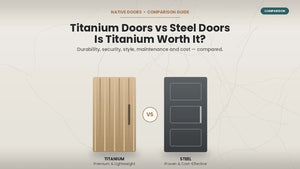
| Door Material | Security | Maintenance | Durability | Design Options | Best For |
|---|---|---|---|---|---|
| Steel | Excellent | Low | Excellent | Moderate | Maximum security |
| Fiberglass | Very Good | Low | Excellent | Excellent | Security and style |
| Solid Wood | Very Good | Moderate to High | Very Good | Excellent | Traditional appearance |
| Composite | Very Good | Low | Excellent | Very Good | Modern homes |
| Aluminum | Good | Low | Very Good | Excellent | Contemporary designs |
Steel doors are widely recognized for their strength and resistance to impact. They can be an excellent choice when security is the primary concern.
Fiberglass combines low maintenance with a wide range of design options, making it a strong choice when you want both security and style.
Wood doors remain popular because of their natural appearance and substantial construction. A high-quality solid wood front entry door can be extremely durable when properly maintained.
Composite and aluminum doors can also provide excellent performance, particularly when they are manufactured with strong cores and quality hardware.
The Door Frame Matters Just as Much
One of the most overlooked aspects of door security is the frame. A strong door installed in a weak frame does not provide the level of protection homeowners expect.
The frame should be securely attached to the surrounding wall structure. Reinforced frames help prevent an intruder from forcing the entire door assembly out of position.
When shopping for entry doors, look beyond the door slab itself. Ask about the construction of the frame and how the complete door system is designed to withstand pressure.
Professional installation is also important. Even a premium door can perform poorly if it is incorrectly fitted or the frame is not properly secured.
High-Quality Locks Add Another Layer of Protection
A strong door needs a reliable locking system. Modern security hardware can make a significant difference in protecting your entryway.
Deadbolts are commonly used because they provide additional resistance compared with simple latch mechanisms. High-quality locks should be paired with strong strike plates and long, durable screws that anchor securely into the framing.
Smart locks are another option for homeowners interested in convenience and access control. Depending on the model, modern systems can offer features such as keypad entry, temporary access codes, and remote monitoring.
However, technology should complement physical security rather than replace it. The overall door system should still have a strong structure, frame, and hardware.
Do Not Overlook the Hinges
Hinges are another important part of a secure door. If hinges are exposed on the exterior, they can become a vulnerable point.
Security-focused door designs may use concealed hinges or reinforced hinge systems. For doors with traditionally visible hinges, security pins or other reinforced hardware provide additional protection.
When comparing modern entry doors, check how the hinges are constructed and where they are positioned. A well-engineered hinge system helps the door remain securely attached to its frame.
What About Glass Panels?
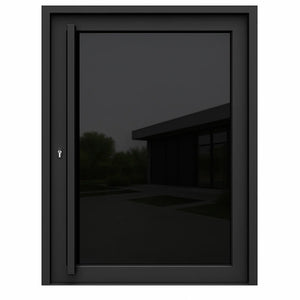
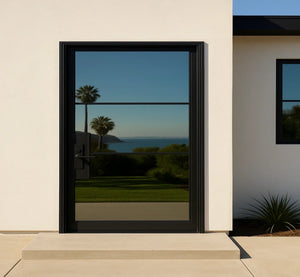
Glass adds natural light and visual appeal to front entry doors, but homeowners should consider its security characteristics.
If you prefer an entry door with decorative or transparent glass, look for impact-resistant or security-rated glass options. Laminated glass provides an additional layer of protection because it is designed to remain more intact when damaged.
The placement of the glass also matters. Large glass panels positioned close to the lock may require additional consideration because of potential access to the hardware.
You do not necessarily need to eliminate glass from your entrance. Instead, choose the right type and configuration for your home's security requirements.
Weather Resistance Also Supports Door Performance
Security is not the only reason to choose a high-quality front door. Your entry door also has to withstand everyday exposure to weather.
Moisture, temperature changes, sunlight, and wind can affect poorly constructed doors over time. Warping or deterioration can create gaps and prevent the door from closing and locking properly.
Weather-resistant materials, quality finishes, proper seals, and durable thresholds help maintain performance for years.
This is particularly important when selecting modern entry doors, because contemporary designs often combine large surfaces, decorative elements, and glass with advanced insulation systems.
Energy Efficiency and Security Can Work Together
A secure door does not have to sacrifice energy efficiency. Many modern entry door systems are designed to improve insulation while maintaining structural strength.
A properly sealed door reduces drafts and helps maintain indoor temperatures. Insulated cores, weatherstripping, and energy-efficient glass all contribute to better thermal performance.
When you shop for entry doors, consider both security and energy performance. A door that performs well in both areas provides greater long-term value.
Key Features of a Secure Entry Door
| Security Feature | Why It Matters |
|---|---|
| Strong door material | Helps resist impact and forced entry |
| Reinforced frame | Prevents weaknesses around the door opening |
| Quality deadbolt | Provides stronger locking performance |
| Reinforced strike plate | Helps strengthen the lock area |
| Durable hinges | Keeps the door securely attached |
| Security-rated glass | Helps reduce vulnerabilities around glass panels |
| Weatherstripping | Helps maintain a secure, properly sealed fit |
| Professional installation | Ensures the entire system works correctly |
Conclusion
The strongest front door is not necessarily the heaviest or most expensive one. True security comes from a complete system that combines a durable door material, reinforced frame, dependable locks, strong hinges, suitable glass, weather protection, and professional installation.
Contact Us
If you are considering a new front entry door for your home, contact us today to discuss your requirements, explore available styles, and find an entry door solution that combines security with the look you want.
FAQs About Secure Front Entry Doors
1. What is the strongest material for a front entry door?
Steel is generally considered one of the strongest choices for a front entry door because of its high resistance to impact and forced entry. However, fiberglass, composite, and solid wood can also provide excellent security when properly constructed and installed.
2. Are modern entry doors secure?
Yes. Many modern entry doors are specifically designed to combine security, insulation, durability, and contemporary style. The security level depends on the complete door system, including the material, frame, locks, hinges, and installation.
3. Is a solid wood door secure?
A high-quality solid wood door can provide excellent security. Its performance depends on the thickness, construction, frame, hardware, and installation. Regular maintenance is also important for long-term durability.
4. What type of lock is best for a front door?
A high-quality deadbolt is a common choice for residential security. The lock should be paired with a reinforced strike plate and securely anchored hardware. Smart locks can also provide useful access-control features when properly installed.
5. Should front entry doors have glass?
Glass is not automatically a security weakness. Security-rated or laminated glass can provide improved protection while allowing homeowners to enjoy natural light and decorative designs. The positioning of the glass should also be considered.
6. How often should a front entry door be replaced?
There is no fixed replacement schedule. A door may need replacement when it becomes damaged, warped, difficult to close, poorly insulated, or outdated. If the frame or locking system has significant weaknesses, replacing the complete door system may be the better option.